

The Panchamahabhuta Jyotirlinga Yatra is one of the most sacred and meaningful pilgrimages in India. It connects five special Shiva temples representing the five elements of nature – Earth, Water, Fire, Air and Sky. These five elements (Panch Tattva) form the foundation of the entire universe as per ancient Indian Philosophy.
This Yatra is not just a temple tour but a spiritual journey that purifies the mind, body and soul. It is a deep spiritual experience where devotees connect with the natural elements that make up life itself.
In this blog, you will learn the meaning of Panchamahabhuta Yatra, its temples, route, the best time to visit and important tips.

Download YatraDham.Org Android App for more guides and easy booking.
What is Panchamahabhuta Jyotirlinga Yatra?
According to ancient scriptures, the whole universe is made of Pancha Mahabhuta (Five natural elements):
- Prithvi (Earth)
- Jal (Water)
- Agni (Fire)
- Vayu (Air)
- Akash (Sky)
In this yatra, devotees visit the five Jyotirlinga where Lord Shiva is worshipped in these five forms. It is believed that Lord Shiva manifests in these forms to maintain balance in nature.
List of Panchamahabhuta Jyotirlingas
Here are the five temples covered in this sacred Yatra.
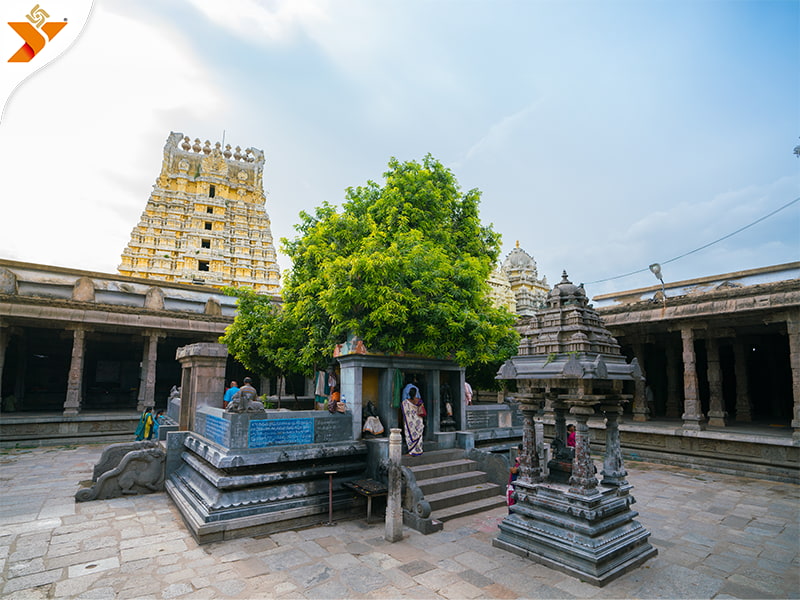
1. Ekambareswarar Temple, Kanchipuram
- Element: Prithvi (Earth)
This sacred temple represents the Earth element. As per belief, Goddess Parvati created a Shiva Lingam from mud under a sacred mango tree and worshipped Lord Shiva here. The deity is known as Ekambareswarar, symbolising stability, patience and grounding.

2. Nataraja Temple, Chidambaram
- Element: Akasha (Sky)
Chidambaram is one of the most unique temples of India. Here Lord Shiva is worshipped as Nataraja, the cosmic dancer. The temple represents the Akasha Tattva – the element of space and consciousness. The famous “Chidambara Rahasyam” symbolises the formless, infinite space.
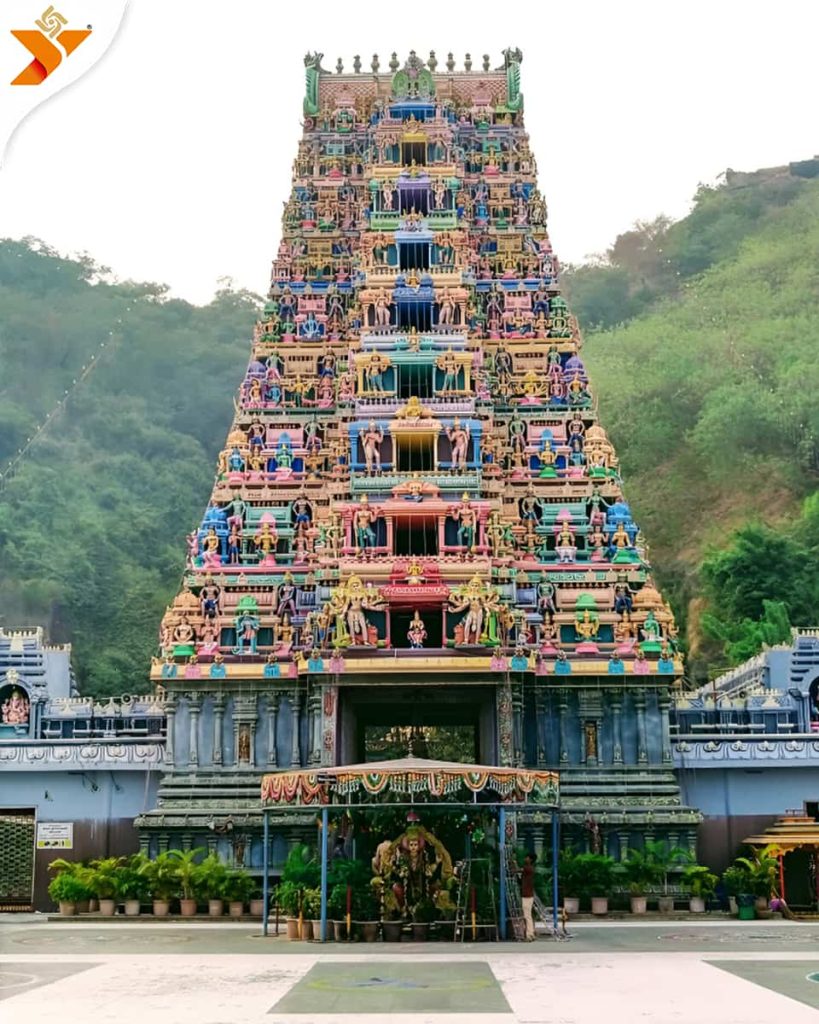
3. Jambukeshwarar Temple, Srirangam
- Element: Jal (Water)
At this temple, Goddess Parvati is believed to have performed penance while surrounded by water. Even today, the sanctum of Jambukeshwarar always has water around the lingam, naturally appearing from the earth. It represents emotional purity, flow and divine grace.
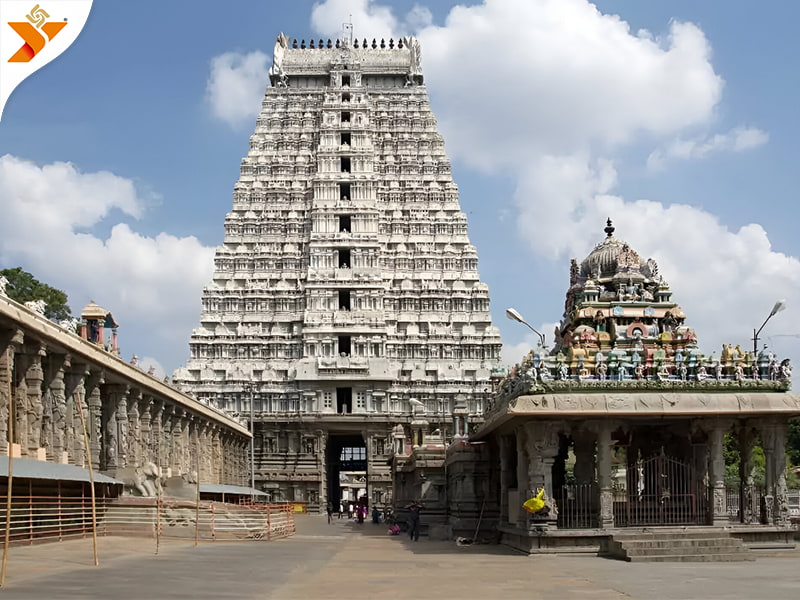
4. Arunachaleswarar Temple, Tiruvannamalai
- Element: Agni (Fire)
Dedicated to the Agni Lingam, this temple signifies the blazing form of Shiva. During the famous Kartik Deepam, a massive flame is lit on the Arunachala hilltop, visible for miles. The fire element stands for transformation, inner power and courage.
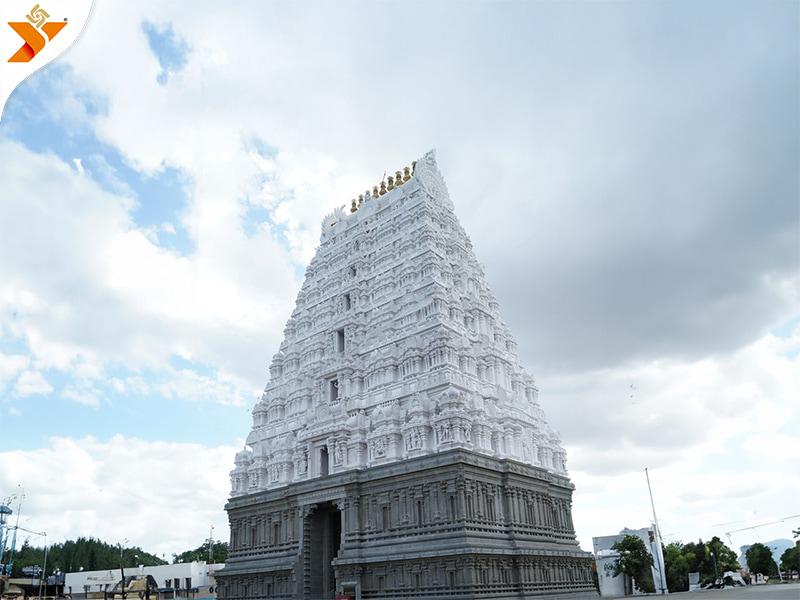
5. Sri Kalahasteeswara Temple, Srikalahasti
- Element: Vayu (Air)
Lord Shiva is worshipped here as the Vayu Lingam. The oil lamp inside the sanctum flickers continuously despite the absence of air movement, showing the constant presence of Vayu Tattva. This temple represents breath, life force and motion.
Complete Travel Route & Distance of Panchamahabhuta Jyotirlinga Yatra
| Route | Distance | Element |
|---|---|---|
| Chennai → Kanchipuram | 75 KM | Earth |
| Kanchipuram → Chidambaram | 190 KM | Sky |
| Chidambaram → Kumbakonam | 75 KM | – |
| Kumbakonam → Thanjavur | 40 KM | – |
| Thanjavur → Srirangam | 70 KM | Water |
| Srirangam → Rameshwaram | 240 KM | – |
| Rameshwaram → Kanyakumari | 310 KM | – |
| Kanyakumari → Suchindram | 20 KM | – |
| Suchindram → Trivandrum | 80 KM | – |
| Trivandrum → Madurai | 270 KM | – |
| Madurai → Tiruvannamalai | 320 KM | Fire |
| Tiruvannamalai → Srikalahasti | 230 KM | Air |
| Srikalahasti → Tirupati | 40 KM | – |
| Tirupati → Tirumala | 25 KM | – |
| Tirumala → Chennai | 150 KM | – |
Spiritual Meaning of Panchamahabhuta Yatra
Each Jyotirlinga represents one of the five basic elements that form human life.
- Earth (Prithvi) – Stability, Grounding
- Water (Jal) – Purity, Emotions
- Fire (Agni) – Strength, Transformation
- Air (Vayu) – Breath, Energy
- Sky (Akasha) – Consciousness, Liberation
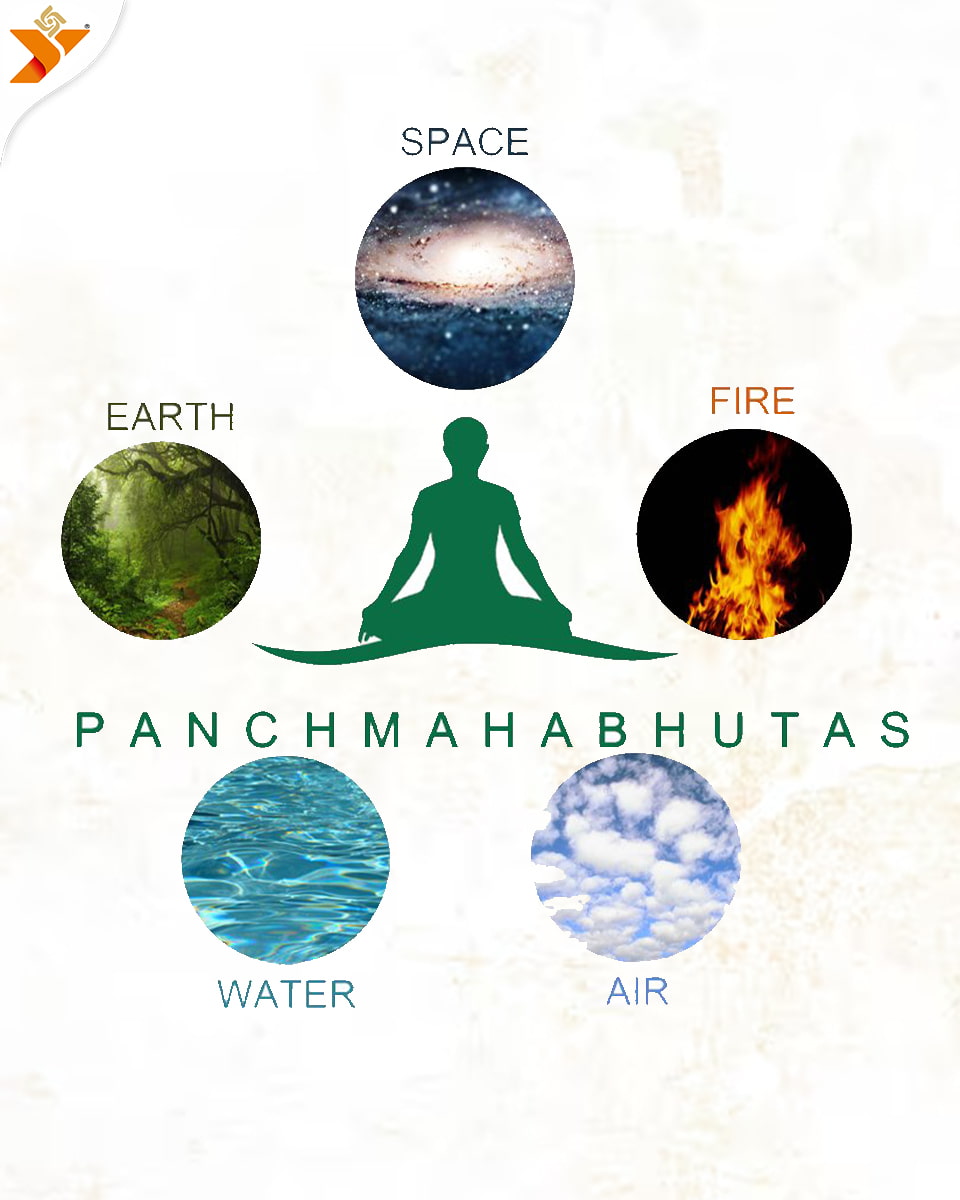
Visiting these temples is believed to purify the five elements within us, bringing inner balance and spiritual awakening.
Highlights Beyond the Panchamahabhuta Jyotirlinga Temple
Along with the five Panchamahabhuta Jyotirlinga temples, this extended yatra also covers some of the most important pilgrimage sites of South India. These temples add rich cultural, historical and spiritual value to your journey.
Major Temples covered in this journey:
- Guruvayur Temple, Thrissur: Famous for Lord Krishna’s worship and known as the “Dwarka of the South.”
- Padmanabhaswamy Temple, Thiruvananthapuram: Dedicated to Lord Vishnu, this temple is world-famous for its divine architecture and ancient treasures.
- Suchindram Temple: A unique temple where the Trimurti – Brahma, Vishnu and Mahesh are worshipped together.
- Kanyakumari Devi Temples & Vivekananda Rock: The southernmost tip of India, known for Devi Kanyakumari’s temple and the peaceful Vivekananda Rock Memorial.
- Rameshwaram Jyotirlinga & Dhanushkodi: One of the 12 Jyotirlingas and an important part of the Ramayana. Nearby Dhanushkodi is a serene spiritual beach town.
- Meenakshi Temple, Madurai: A masterpiece of South Indian art and architecture, dedicated to Goddess Meenakshi and Lord Sundareswarar.
- Srirangam Temple: The largest functioning temple complex in the world, dedicated to Lord Ranganatha (Vishnu).
Also check, How to Get SSD Darshan at Tirumala.
Best Time to Plan for Panchamahabhuta Jyotirlingas Yatra
The best time to go on the Panchamahabhuta Jyotirlinga Yatra is from October to March. During these months, the weather is cool and comfortable, which makes travelling and temple darshan easy.

Winter: October to March
- Pleasant weather, good for travelling by road.
- Comfortable for senior citizens and children.
- You can visit all temples without heat or discomfort.

Summer: April to June
- Very hot in Tamil Nadu and Andhra Pradesh.
- Daytime travel becomes tiring.
- Not suitable for long temple visits.

Monsoon: July to September
- The weather is calm and green.
- Travel is possible, but you may face light to moderate rain.
- Some roads can be slippery.
Travel Tips for Pilgrims Visiting Panchamahabhuta Jyotirlingas
A pilgrimage becomes easy when you plan a few things before starting your journey. These tips will help you travel comfortably and enjoy your darshan without any stress.
- Always carry a valid ID card, especially for Tirumala darshan.
- Book Tirupati darshan tickets in advance.
- Wear comfortable traditional clothing.
- Some temples follow dress code; pack accordingly.
- Keep your luggage light, so it is easy to carry during temple visits.
- Keep water, snacks and medicines for long journeys.
- Respect temple customs.
- Start temple darshan early morning to avoid the rush.
- Book your stay in advance.
Learn more about Guruvayur Temple Darshan Online Booking.
Why Panchamahabhuta Jyotirlingas Yatra Is Special
The Panchamahabhuta Jyotirlinga Yatra is not only a circuit of divine temples, but also:
- A journey to strengthen one’s faith.
- A cleansing experience for the mind and body.
- A connection to ancient Indian heritage.
- A way to understand the deeper meaning of the five elements.
- A reminder of India’s rich spiritual history.
Travelling through these sacred temples reconnects us with our spiritual roots and fills the heart with peace, devotion and clarity.
Frequently Asked Questions
The five Pancha Boothas are the five basic elements in Hinduism and Indian philosophy: Earth (Prithvi), Water (Jal), Fire (Agni), Air (Vayu) and Sky (Akasha).
3 to 5 days are enough for the Panchamahabhuta yatra.
Yes, all five temples belong to the ancient Shiva temples.
No, this is a special 5-linga yatra based on the five elements: earth, sky, water, air and fire.
Yes, the temples are easily accessible for senior citizens and children.
The Panchamahabhuta Jyotirlinga Yatra is a very special spiritual journey. It helps you feel close to Lord Shiva and understand the natural energies of earth, water, fire, air and sky. If you are looking for a peaceful and devotional trip that fills your mind with positivity, then this yatra is a perfect option for you.