
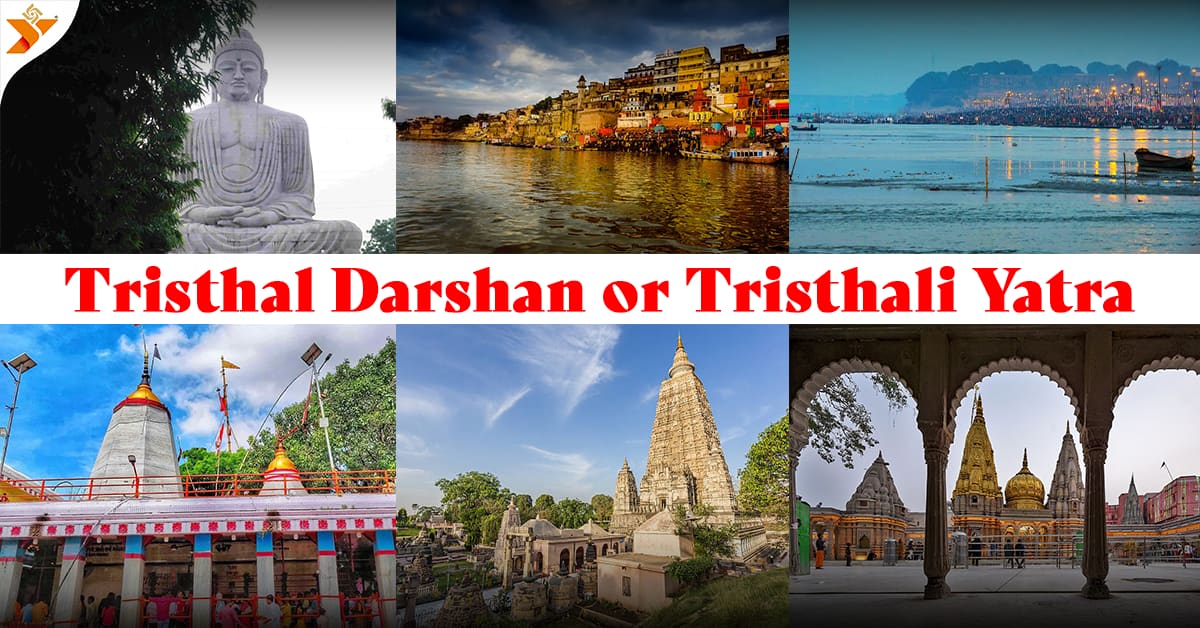
Tristhal Darshan or Tristhali Yatra is a sacred Hindu pilgrimage. Devotees go on this journey to worship three main deities – Lord Vishnu, Lord Shiva and Goddess Shakti, in a single holy circuit. It is believed that this yatra cleanses the soul, removes past sins and brings peace, happiness and spiritual blessings.

Download YatraDham.Org Android App for more guides and easy booking.
What is Tristhal Darshan or Tristhali Yatra?
The word “Tristhal” means “three holy places” and “Darshan” means “to see or visit a sacred shrine.” Tristhal Darshan, also called Tristhali Yatra, is a sacred pilgrimage that takes devotees to three important holy places in Hinduism:
- Vaishnava Tirtha: A temple or place related to Lord Vishnu
- Shaiva Tirtha: A temple or place related to Lord Shiva
- Shakti Tirtha: A temple or place dedicated to Goddess Shakti
People go on this yatra to seek spiritual blessings, peace and the grace of the Divine, including Lord Vishnu, Lord Shiva and the Goddess Shakti.
Tristhal Darshan Route – Complete Pilgrimage
A Tristhal Yatra usually includes visiting three main temples. The exact temples may vary depending on the region. Here is a simple guide:
This temple is dedicated to Lord Vishnu, the preserver of this universe. Devotees come here to pray for peace, protection and spiritual well-being.
Highlights:
- Idol of Lord Vishnu
- Sacred water for ritual bathing
- Chanting Vishnu mantras
2. Shiva Temple (Shaiva Tirtha)
Next, pilgrims visit Shiva temple, dedicated to Lord Shiva, the destroyer of ignorance and the one who brings transformation.
Highlights:
- Shiva Lingam
- Rudra Abhishek
- Ringing bells and offering damru
3. Shakti Temple (Shakti Tirtha)
The final temple is for Goddess Shakti, the divine mother. This temple represents strength, energy and fertility.
Highlights:
- Idols of Navadurga or Devi Tripurasundari
- Aarti and distribution of prasad
- Chanting devotional hymns like Durga Saptashati
Also read about the 9 Famous Places to Visit in Tamil Nadu.
Spiritual Significance of Tristhali Yatra
The Tristhali Yatra holds great spiritual value for devotees and is believed to bring inner peace and divine blessings.
1. Complete Spiritual Cleansing Through Trishthali Yatra
Worshipping Vishnu, Shiva and Shakti together helps bring balance to life and mind. It represents protection, transformation and positive energy.
2. Removal of Past Sins and Karmic Balance
This sacred journey is believed to wash away past wrong deeds and purify the soul, bringing spiritual upliftment.
3. Peace, Prosperity & Divine Blessings
Devotees gain divine grace, which leads to mental peace, prosperity and a deeper spiritual connection.
This yatra is considered a powerful path toward faith, purity and self-realisation.
Best Time to Do Tristhal Darshan
You can plan the Tristhal Darshan at anytime of the year. However, many devotees prefer visiting during special religious days, as the spiritual atmosphere feels more powerful and peaceful.
The most auspicious times are:
A holy period dedicated to Goddess worship.
Mahashivratri – Best Time for Tristhal Darshan
Very important for Lord Shiva devotees.
Ekadashi and Purnima for Tristhali Yatra
Considered sacred days for prayers and fastings.
Shravan Month for Tristhal Darshan
Especially Mondays, which are highly auspicious for Lord Shiva.
Visiting during these times makes the darshan more meaningful and spiritually fulfilling.
Popular Tirsthal Circuits in India
In different parts of India, Tristhali Yatra connects three important temples, usually dedicated to Vishnu, Shiva and Shakti. These temple groups are formed based on local benefits and traditions. Here are some well-known Tristhali circuits followed by pilgrims:
Tristhal Darshan Circuit in North India
Vaishno Devi – Baidyanath Jyotirlinga – Vidhyavasini Devi
This route is popular among devotees who wish to seek blessings from all three forms of divine power in one journey.
Tristhali Yatra Circuit in South India
Ranganathaswamy Temple – Annamalaiyar temple – Meenakshi Amman Temple
This circuit is known for its ancient temples, strong spiritual energy and rich temple traditions.
Tristhal Darshan Circuit in West India
Somnath – Dwarka – Ambaji
Pilgrims visit this circuit to worship Lord Shiva, Lord Krishna and Goddess Shakti.
Tristhali Yatra in East India
Puri – Lingaraj – Taratarini Mata
This route is deeply connected with devotion, rituals and regional faith practices.
The choice of Tristhal Yatra often depends on local customs, festival timings, roads and rail connectivity and personal devotion.
How to Plan Your Tristhal Darshan Yatra
Duration of Tristhali Yatra
The yatra can take 2 to 10 days, depending on the route you choose and how far the temples are from each other.
Simple Trishthal Darshan Itinerary Tips
- Begin your journey at the Vishnu Temple.
- Next, visit the Shiva Temple.
- End the yatra at the Shakti temple.
- Try not to take long breaks in between so the yatra is completed in one spiritual flow.
Important Rituals & Customs During Tristhali Yatra
- Take a holy bath before entering each temple.
- Offered prasad, flowers and a lamp (diya) to the deity.
- Attend aarti in the early morning or evening for a peaceful experience.
This simple planning helps you complete the Tristhal Drashan with devotion and ease.
Benefits of Tristhali Yatra
1. Spiritual Growth Through Trishthal Darshan
Helps you feel closer to God and understand yourself better.
2. Karma Cleansing and Soul Purification
Believed to wash away past sins and reduce the burden of Karma.
3. Mental Peace and Inner Calm
Brings calmness to the mind through prayer and devotion.
4. Cultural and Religious Experience
Lets you learn about local traditions, stories and temple rituals.
Frequently Asked Questions – FAQs
Tirsthal darshan is a holy journey where devotees visit three important temples. These temples are dedicated to Lord Vishnu, Lord Shiva and Goddess Shakti. The yatra is believed to bring peace of mind, spiritual strength and blessings.
In the Tristhali yatra, three main temples are visited:
1. One temple of Lord Vishnu
2. One temple of Lord Shiva
3. One temple of Goddess Shakti
The best time for Tristhal Darshan is during auspicious months and festivals, such as:
1. Navratri
2. Mahashivratri
3. Shravan Month
4. Full Moon days (Purnima)
The Tristhali yatra usually takes 2-10 days. The duration depends on the places chosen, travel distance and how much time you want to spend at each temple.
A guide is not compulsory, but having a local guide or pilgrimage planner can be helpful. They assist with temple timings, rituals and smooth travel, especially for first-time visitors.
Tirsthal Darshan or Tirsthali Yatra is more than just a religious trip; it is an experience of devotion, self-reflection and inner transformation. Whether you seek spiritual awakening, cultural richness or divine blessings, this sacred pilgrimage can open your heart and elevate your soul.