

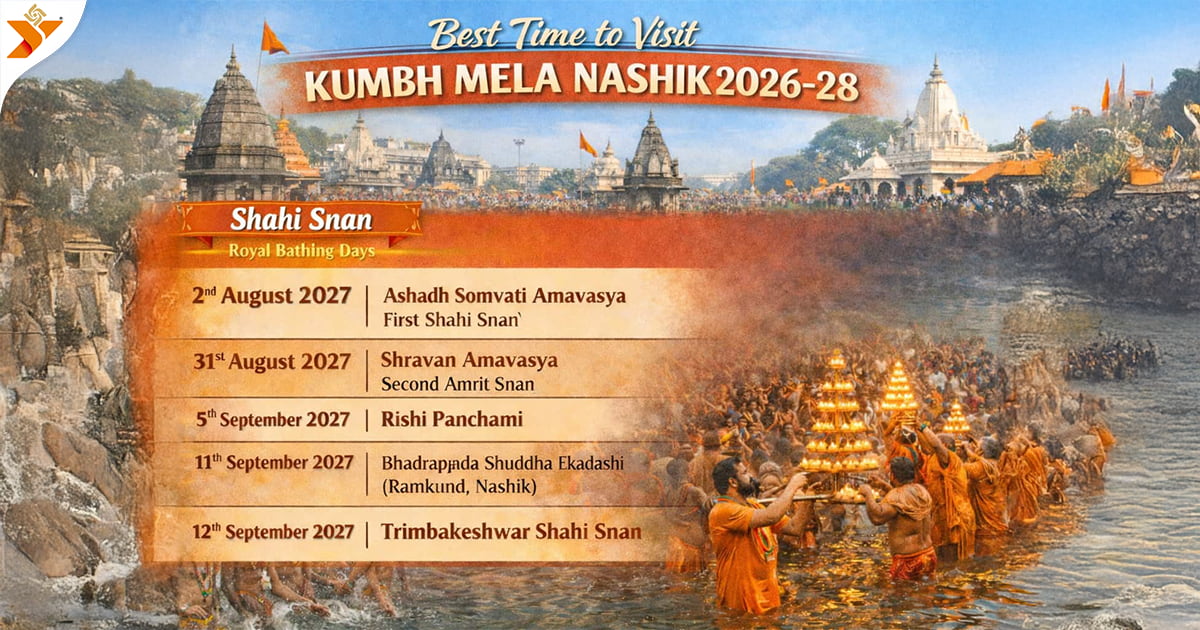
The Simhastha Nashik Kumbh Mela will start with the flag hoisting on 31 October 2026. On that day, the Kumbh Mela is believed to start officially. The previous Kumbh Mela in Nashik was in 2015 and the next will be in 2026.
Every Kumbh Mela holds significant importance and it repeats every 12 years as per the auspicious planetary positions. Here, we discussed the best days to visit the Nashik-Trimbakeshwar Kumbh Mela 2026.
1. Shahi Snan (Amrit Snan) Days – Most Auspicious Days
– This is the spiritual heart of the Kumbh Mela.
Shahi Snan days are the most sacred and the peak days of the entire Kumbh Mela. It will be held on the auspicious days.
- Akhada and Naga Sadhus lead grand processions
- Saints and sadhus take the first dip in the Godavari River
- The religious energy is believed to be at its peak
- Lots of the devotees come to Ramkund and Trimbakeshwar ghats
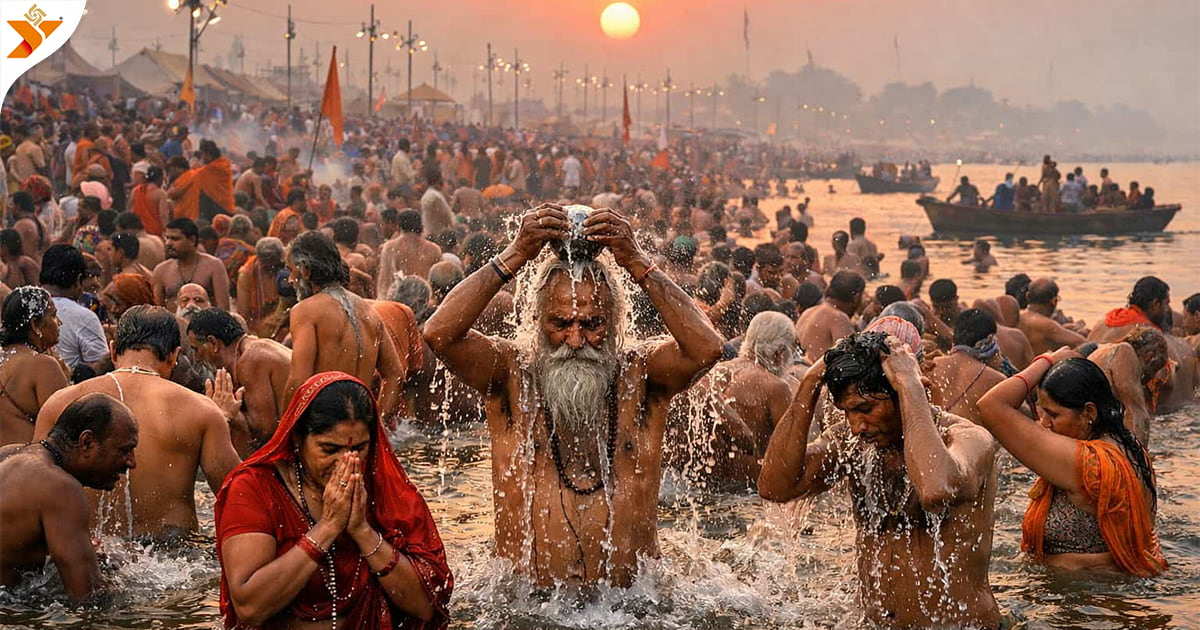
Why visit on Shahi Snan?
- It is believed that dipping in the Godavari River during the Shahi Snan days is a hundred times more religious than on normal days.
- A very rare astrological alignment.
Which is ideal for:
- Spiritual aspirants
- People visiting Kumbh for the very first time
2. Amrit Snan
Best for: Devotees seeking auspicious bathing with slightly less pressure. Amrit Snan days are very highly auspicious bathing days based on planetary transitions.
Benefits:
- Very high religious significance
- A little more manageable than Shahi Snan days
- Ideal for pilgrims and devout people
3. Festivals & Ritual Days (Parva Snan Days)
Apart from the Shahi Snan days, Parva Snan days are also important.
What is Parva Snan?
- Parva Snan refers to holy bathing that happens on specific auspicious tithi dates (festival days) during the Kumbh Mela, other than Shahi Snan days.
- These days hold strong astrological significance because certain nakshatra-yoga-tithis combinations make the river bath spiritually powerful.
- Shahi Snan > Performed by Akhadas
- Parva Snan > Mainly for general devotees, pilgrims and sadhus
Importance of Parva Snan:
- Believed to purify Karma and remove past-life doshas
- Considered highly yielding because planets align in a favourable position
- Helps devotees who cannot attend the massive Shahi Snan
- Each Parva Snan has its own ritual meaning, linked with a specific deity or celestial event
- During the Parva Snan days, the crowd is high, but not as high as Shahi Snan
What happens during Parva Snan?
Various activities are happening during the Parva Snan.
Typical activities:
- Ritual dip in the river (Godavari for Nashik Kumbh)
- Offering arghya to Surya
- Performing the Shaiva and Vishnu Puja
- Havan, Jaap, Daan and Sankalp
- Discourses by Saints
- Temple visits
Types of Parva Snan
Common Parva Snan days include the following:
- Paush Purnima
- Magh Amavasya
- Makar Sankranti
- Basant Panchmi
- Maghi Purnima
- Mahashivratri
Spiritual benefits of Parva Snan:
- Cleansing of Sins and Negative Karmas
- Bring peace of mind and emotional purification
- Strengthens devotion and spiritual discipline
- Enhances the effect of Daan, Jaap and Sankalp
- Increases blessings of Lord Shiva & the Sacred River
4. Early Phase of the Kumbh Mela (Opening time)
At the beginning of the Kumbh Mela, crowds are limited, so it’s best for peaceful and comfortable travel.
If you want to avoid traffic congestion, reach the Kumbh Mela after the flag hoisting (Dhwajarohan) ceremony because it is best for
- Less crowd
- Smooth accommodation availability
- Pilgrims can take the darshan easily at Ramkund and Trimbakeshwar
- This tenure is good for those seeking serenity over the crowd
5. Weekdays (Non-Snan Days)
This time period is the best for older people, families and short-term visitors. The weekdays, except on Non-Snan days, are ideal for:
- Seek the smooth temple darshan
- Prefer those who want to walk comfortably at the ghats
- Wish to attend satsangs, devotional chanting and discourses peacefully
6. Last Phase of the Kumbh Mela
Best for learning & spiritual closure, the Kumbh closures:
- Serene religious atmosphere
- Many of the Akhadas remain active
- Satsangs, bhajans and discourses increase
- The crowd gradually reduces
Comparison between the best days to visit:
| Purpose | Best Time to Visit |
|---|---|
| Maximum spiritual standard | Shahi Snan days |
| Holy bath with balance | Amrit Snan days |
| Less crowd, more comfort | Parva Snan/weekdays |
| Senior citizens & families | Early phase/weekdays |
| Cultural & spiritual learning | Moderate phase |
Important Travel Advice
- All the hotels and accommodations should be booked months in advance, especially for Shahi & Amrit Snan days
- Reach Nashik before the peak days like Shahi Snan
- Follow the rules of crowd movement routes and safety instructions
- Avoid peak days if you want peace

The best days to visit the Nashik Kumbh Mela depend on the final intention:
- For sacred intensity and tradition, select Shahi Snan
- For balanced devotion and comfort, select between Amrit or Parva Snan
- Choose non-Snan days for a tranquil flow
Choose your stay or travel according to your preference. Make sure to book rooms at least 6 months in advance to avoid traffic congestion.
Read more about our other articles, such as Kumbh Mela Akhadas, FAQ’s about Kumbh Mela, How to reach, Kumbh Mela 2026 Dates and Trimbakeshwar Kumbh Mela.

Download the official application of YatraDham.Org.
FAQ’s
The best time to visit Kumbh Mela Nashik is during the Shahi Snan days.
Shahi Snan, which is mainly performed by Akhadas and Parva Snan is for general devotees, pilgrims and sadhus.
Yes, if you want to avoid the rush, then it is best to visit during the Parva Snan days, except for the Shahi Snan days.
Ashadh Somvati Amavasya, Shravan Amavasya and Bhadrapada Ekadashi are the 3 types of Shahi Snan that will occur in the next Nashik Kumbh Mela.
You can stay near the Ramkund in Nashik for easy access.