
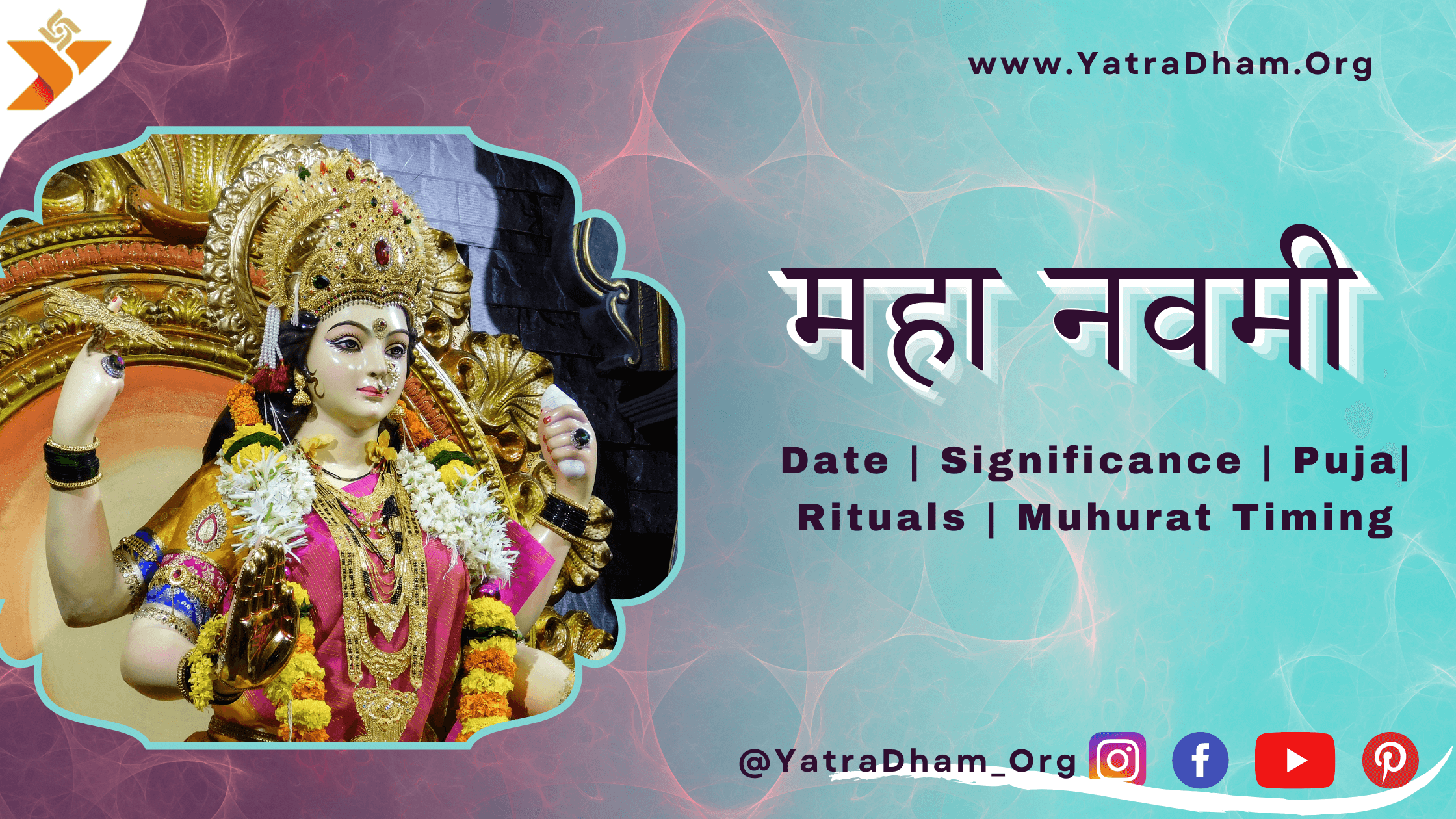
Maha Navami is the last day of Shardiya Navratri and also the last day of the three important days of Durga Puja. This day marks Navratri’s end and the fasting many devotees observe. This year in 2025 Maha Navami falls on the 1st of October.
This was the day Mata Durga killed the demon Mahishaura in the battle that started on Maha Saptami. The Goddess is also worshipped as Mahishuramardini or Maa Siddhidatri on this day.
Navami Tithi begins – September 30th, 2025 – 06:06 PM
Navami Tithi ends – October 1st, 2025 – 07:01 PM
On the day of Maha Ashtami, Nabapatrika and Mahasnan are first done as they were on Maha Saptami and Ashtami. Nine plants tied together are bathed in Gangaajal for the Nabapatrika ritual. A mirror reflecting Durga Mata’s image is bathed with Gangajal followed by the 16-step puja (Shodashopchar).

Maha Navami symbolizes the final phase of Maa Durga’s battle with the demon Mahisasura and marks her imminent victory.
- Navami Puja – Devotees offer prayers and perform rituals to honour Goddess Durga in her powerful form. The puja usually involves chanting hymns, offering flowers and presenting food (Bhog) to the Goddess.
- Traditional Offering – In ancient times, animal sacrifices were made, but today most people offer symbolic sacrifices like fruits, pumpkins or coconuts to honour the goddess.
- Navami Homa – A Homa (fire ritual) is performed by offerings like Ghee, wood and grains are placed into the sacred fire. It symbolizes purification and the destruction of negative energies.
- Durga Aarti – The day typically concludes with a grand aarti, where devotees wave lamps and sing hymns to express their devotion.
The Murti of Durga Mata is immersed in a water body the next day.
Also Read: List of Shakti Peeth with Place & Body Part
Usually, we find that people from all over India celebrate this festival in their own unique way to seek the blessings of Navadurga. It is believed that the 9 days of Navratri Maa Durga fulfil the wishes of people who worship and take blessings from Maa.
It is celebrated in the state of Gujarat and Maharashtra as an important Navratri, but in the states of Assam, Bihar, Odisha, West Bengal, etc, they celebrate these 10 days as Durga Puja.
But the similarity is that they both worship the Goddess with great enthusiasm, fervour and devotion.
Maa Siddhidatri – The Ultimate Blessing
Durga Mata is worshipped as Maa Siddidatri on the ninth and final day of Navratri. The reason for this lies in the meaning of the Goddess’ name. ‘Siddhi’ indicates a spiritual power that is needed for the attainment of Moksha, which is the final goal in Sanatana Dharma.
‘Datri’ means “the one who gives.” Maa Siddhidatri is the giver of the ultimate blessing needed to cross the ocean of ignorance. Maa Siddhidatri is the Adi Shakti herself.
Don’t Skip – 9 Devi Images With Names, Colours and Favourite Flower
This period of nine days, known generally as Shardiya Navratri and Durga Puja in the Eastern regions of India, is one of the most popular festivals in India. This is a time that is awaited eagerly and celebrated wholeheartedly when it comes. Across India, one can feel a wave of joy, positivity, brotherhood and harmony.
Each region or state has its own traditions and ways of celebrating but the essence is the same. This is a tribute to and the worship of the nine forms of the One Adi Shakti. This festival has deep roots going back to ages unknown.
One record of an international traveller in about 1453 mentions the grand scale of celebrations in Hampi, the capital of the Vijayanagara Dynasty at its peak.
There are many other references to this ubiquitous festival found in ancient travellers’ diaries and accounts. It is a festival that can be called as ‘The Grand Indian Festival’.
Know about Importance of Durga Puja
Happy Maha Navami!