


Navratri is called the festival of joy. On these nine days of Navratri, Hindus believe that the nine goddesses come and shower their blessings on all of them. Devotees fast for the nine days of Navratri. The festival is celebrated with the Garba and Dandiya nights, every Gujarati is so excited for the festival of Navratri and to play Garba.

Download YatraDham.Org Android App for more guides and easy booking.
As the festival of joy arrives here is a list of 9 Mataji’s worshipped during the festival of joy Navratri. Below are the Navratri 9 Devi Images With Name.
| Date | Day | Goddesses | Favourite Flower |
|---|---|---|---|
| 22nd Sept 2025 | Day 1 | Shaila Putri | Hibiscus |
| 23rd Sept 2025 | Day 2 | Brahmacharini | Chrysanthemum flower |
| 24th & 25th Sept 2025 | Day 3 | Chandraghanta | Lotus |
| 26th Sept 2025 | Day 4 | Kushmanda | Jasmine |
| 27th Sept 2025 | Day 5 | Skandamata | Yellow Rose |
| 28th Sept 2025 | Day 6 | Katyayani | Marigold |
| 29th Spt 2025 | Day 7 | Kalaratri | Krishna kamal |
| 30th Sept 2025 | Day 8 | Mahagauri | Mogra |
| 1st Oct 2025 | Day 9 | Siddhidatri | Champa |
1. Shaila Putri Devi (Daughter of Mountain)
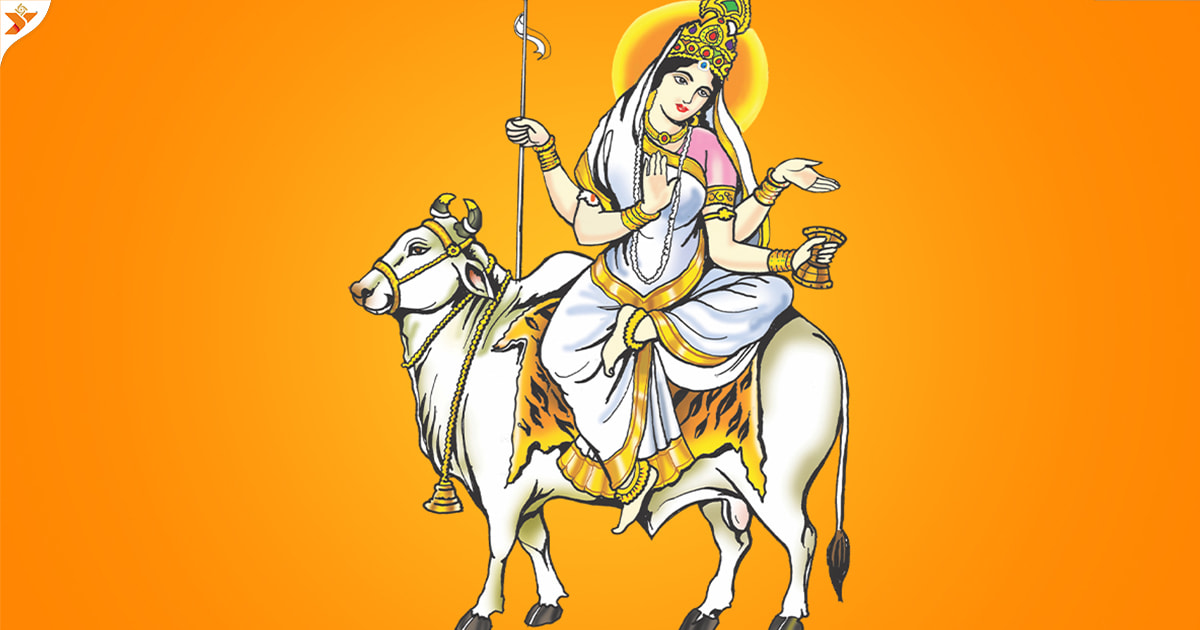
Shailputri Devi is the first form of Goddess Durga, worshipped on the first day of Navratri. She is the daughter of the mountain because she was born as a daughter of the Himalayan King, Himavat. She is a form of Hindu Goddess Mahadevi, representing herself in the pure form of Goddess Parvati. She is riding a bull named Nandi, holding a trident and lotus in her hands.
It is believed that the Devi gives Shakti to attain higher spiritual growth. She is worshiped as Purna Prakriti Durga. The temple of Shaila Putri is located in Varanasi, Uttar Pradesh, India.
Shailputri Devi’s Favourite Colour
The favourite colour of Shailputri Devi is orange. This colour is used during her worship to represent strength and energy.
Shailputri Devi’s Favourite Flower
The favourite flowers of Shailputri Devi are the Hibiscus. This flower is commonly offered to her.
Rituals to Worship Shailputri Devi
- People fast on the first day of Navaratri, eating only sacred foods, fruits and milk to honour Shailputri Devi.
- Place a picture of the idol of Shailputri Devi on the clean altar and decorate it with flowers like Jasmine and Hibiscus. You can also put a Kalash, filled with water and a coconut on the top as a symbol of devotion.
- Offer her seasonal fruits, sweets or almond pudding and flowers.
- Recite the Durga Saptashati Path and chalisa, chant Maa Shailputri Mantra to seek her blessings.
- Perform an Aarti using a lamp and camphor while singing or listening to Bhajans dedicated to her.
- Meditate on your root chakra (Muladhara) and focus on the divine form of Mother Shailputri.
- Fold your hands and seek forgiveness for any unintentional mistakes and humbly ask for blessings from the mother goddess.
Maa Shailputri Mantra in Hindi and English
‘ॐ ऐं ह्रीं क्लीं शैलपुत्र्यै नम:।’
‘Om Aim Hreem Kleem Shailputri Namah’
Worshiping Shailputri Devi brings health, wealth and spiritual growth.
2. Brahmacharini Mata (Mother of Devotion and Penance)

Brahmacharini Mata is the second aspect of Nav Durga, worshipped on the second day of Navratri. She is an unmarried form of Goddess Parvati. In this form, she performed intense tapasya for thousands of years to win Lord Shiva as her husband.
Brahmacharini Mata is depicted walking barefoot, holding a Japamala in her right hand and a kamandalu in her left hand. She is a devoted female student living in an ashram with her Guru and other students. These symbolize her simple life of devotion, meditation and inner strength.
Maa Brahmacharini is the symbol of love and immense strength, her only desire is to marry Lord Shiva. Her temple is located at the Panchganga Ghat, Ghasi Tola, Varanasi, Uttar Pradesh.
Brahmacharini Mata’s Favourite Colour
The favourite colour of Brahmacharini Mata is white, symbolizing purity, peace and calmness.
Brahmacharini Mata’s Favourite Flower
The favourite flower of Brahmacharini Mata is the Chrysanthemum flower. Devotees often offer this flower during her worship.
Rituals to Worship Brahmacharini Mata
- Wear vibrant yellow or white cloth or ornaments to symbolize purity and devotion.
- Offer items such as jasmine flowers, rice, curd, milk, honey and sandalwood in a kalash or on the idol of the Goddess, ensure that it is fresh and clean.
- Recite the Durga Saptashati Path and chalisa, chant the Brahmacharini Mata mantra “Om Devi Brahmacharinyai Namah” and light a ghee lamp or oil lamp.
- Perform Aarti in homage to Maa Brahmacharini.
- Distribute Prasad to needy people.
Maa Brahmacharini Mantra in Hindi and English
‘ॐ ऐं ह्रीं क्लीं ब्रह्मचारिण्यै नम:।’
‘Om Aim Hreem Kleem Brahmacharini Namah’
Worshipping Brahmacharini Mata blesses devotees with patience, strength and spiritual wisdom.
3. Chandraghanta Mata(Destroyer of Demons)

According to the Shiva Maha Purana, Chandraghanta is the ‘shakti’ of Lord Shiva in the form of Chandrashekhara. Each aspect of Shiva is accompanied by the Shakti, therefore Ardhanarishvara.
She rides on a tiger, showing her fearless nature and has ten arms holding weapons like a sword, trident and bow. It is believed that she is the goddess of spiritual and internal strength who represents calm and peace but can also become fierce to destroy evil and protect righteousness.
Chandraghanta Mata’s Favourite Colour
The favourite colours of Chandraghanta Mata are red, which symbolises courage and warmth.
Chandraghanta Mata’s Favourite Flower
Chandraghanta Mata loves yellow flowers like marigolds and sunflowers. Devotees offer these flowers during her worship.
Rituals to Worship Brahmacharini Mata
- Devotees typically wake up early in the morning and after taking a bath wear clean clothes.
- Set up an altar for the Goddess on the first day of Navaratri.
- Light a Ghee lamp and incense stick to begin the rituals.
- Offer flowers like marigolds and sunflowers, kumkum, sindoor, sweets, milk and seasonal fruits to the Goddess. Milk products are special offerings that please her.
- Recite the Durga Saptashati Path and chalisa, chant Chandraghat Mata’s Mantra to seek her blessings.
- Perform Aarti and sing or listen to devotional songs dedicated to her.
- After offering Bhog Prasad, break the fast with Sattvik food.
Maa Chandharghanta Mantra in Hindi and English
‘ॐ ऐं ह्रीं क्लीं चन्द्रघंटायै नम:।’
t‘Om Aim Hreem Kleem Chandraghantaayai Namah’
Worshipping Chandraghanta Mata brings bravery, peace and protection from negative energies.
4. Kushmanda Mata (Goddess of Cosmic Egg)

Kushmanda is the Hindu Goddess who is credited with the creation of the world with her divine smile and is also known as the goddess of light and energy. Followers of Kalikula believe her to be the fourth aspect of Navdurga’s form of Mahadevi. Her name signals her main role: Ku means ‘a little’, Ushma means ‘warmth’ and ‘energy’, and means a ‘cosmic egg’. It is located in the Durga Kund area of Varanasi. She rides a lion, with eight arms holding weapons, a rosary and a pot of nectar, symbolizing power and courage. She is considered the goddess of life, energy and vitality.
Kushmanda Mata’s Favourite Colour
The favourite colour of Kushmanda Mata is Royal Blue, which symbolises power and wealth.
Kushmanda Mata’s Favourite Flower
The favourite flower of Kushmanda Mata is Jasmine. Devotees honour Goddess Kushmanda with fragrant Jasmine flowers during the Holi festivals of Navaratri.
Rituals to Worship Kushmanda Mata
- Wear clean yellow clothes to worship the Goddess.
- Offer yellow sandalwood, kumkum, molly, akshat, a betel leaf with saffron, seasonal fruits, malpua and yellow sweets to the goddess.
- Worship to Lord Shiva and Brahma along with Maa Kushmanda.
- Chant Maa Kushmanda mantra and recite the Durga Saptashati or Siddha Kunjika Stotra and chalisa.
- Perform Aarti with devotional songs dedicated to her.
Maa Kushmanda Mantra in Hindi and English
‘ॐ ऐं ह्रीं क्लीं कूष्मांडायै नम:।’
‘Om Aim Hreem Kleem Kooshmaandaayai Namah’
Worshiping Maa Kushmata brings light, energy and happiness into the lives of her devotees.
5. Skandamata Devi (Goddess of Motherhood and Children)

Skandamata Devi is the fifth form of Goddess Durga, worshipped on the fifth day of Navaratri. Her name comes from “Skanda“, an alternate “god of war Kartikeya“ and “Mata“, meaning “Mother“. She represent the strength of a mother who nurtures and protect her children. Her abode is in Vishuddha Chakra.
She is depicted riding a lion and holding her son Kartikeya on her lap. She has four arms, carrying lotuses in two hands while one hand hod her son and fourth hand is in a blessing gesture. Worshipping her brings not only her blessing but also the blessings of Lord Karthikeya, her son.
Devotees believe that Sakndamata brings fortune and luck into their lives. The colour orange signifies brightness and knowledge and is the colour of Goddess Sakndamata. It is located in Jatipur, Varanasi.
Skandamata Devi Favourite Colour
The favourite colour of Skandamata is yellow, which represents the nurturing nature of a mother.
Skandamata Devi Favourite Flower
The favourite flower of Skandmata is Yellow rose. Devotees honour Goddess Kushmanda with yelow rose or yellow flowers to seek her blessings.
Rituals to Worship Maa Skandamata
- The puja area is cleaned and a mandap is placed set up using mango leaves or a wodden stool.
- An idol or picture of Maa Skandamata is placed on the mandap.
- Light a diya and incense stick in front of the Goddess.
- Fragrant flowers, kumkum, fruits and sweets offered to Skandamata devi.
- Chant mantra dedicated to Skandamata Devi and perform aarti with a ghee lamp and camphor.
- The prasad is distributed among family and friends after the puja is concluded.
Maa Skandamata Mantra in Hindi and English
‘ॐ ऐं ह्रीं क्लीं स्कंदमातायै नम:।’
‘Om Aim Hreem Kleem Skakndamaataayai Namah’
Worshipping Skandamata Devi brings maternal blessings, protection and love and ensure the well-being and prosperity of her devotees.
6. Katyayani Mata (Goddess of Power)

Mata Katyayani is seen as the slayer of the cruel demon Mahisasura. She is also seen as a warrior Goddess who was able to bring peace to the world. Maa Katyayani is one of the fiercest forms of Maa Durga and is also called the Mahishasurmardini.
Seated on a lion, Goddess Katyayani is depicted carrying a sword in her right and a lotus flower in her left hand. This temple is located in Mahi Sagar district, Gujarat.
Katyayani Mata’s Favourite Colour
The favourite colour of Katyayani Mata is Green, which symbolises balance and growth, ensuring peace and transquility in life.
Katyayani Mata’s Favourite Flower
The favourite flower of Maa Katyayani is marigold. Devotees honour Goddess Katyayani Mata with marigold flowers to seek her blessings.
Rituals to Worship Maa Katyayani
- Cleanse the idol or image of Maa Katyayani with Gangajal and dressed her with red or yellow color cloth.
- Offer red flowers or marigold, fruits, honey and sweets to the Goddess.
- Chant the simple mantra dedicated to her to seek her bleesings
- Perform Aarti, singing or listening bhajanas dedicated to her.
Maa Katyayani Mantra in Hindi and English
‘ॐ ऐं ह्रीं क्लीं कात्यायनायै नम:।’
‘om ain hrin klin kaatyayani namah’
Worshiping Katyayani Mata brings courage, victory and fulfilment of desires, especially in love relationship. Devotees pray to her for strength and protection from evil as well as for happiness in marriage.
7. Kalaratri (Goddess of Auspiciousness and Courage)
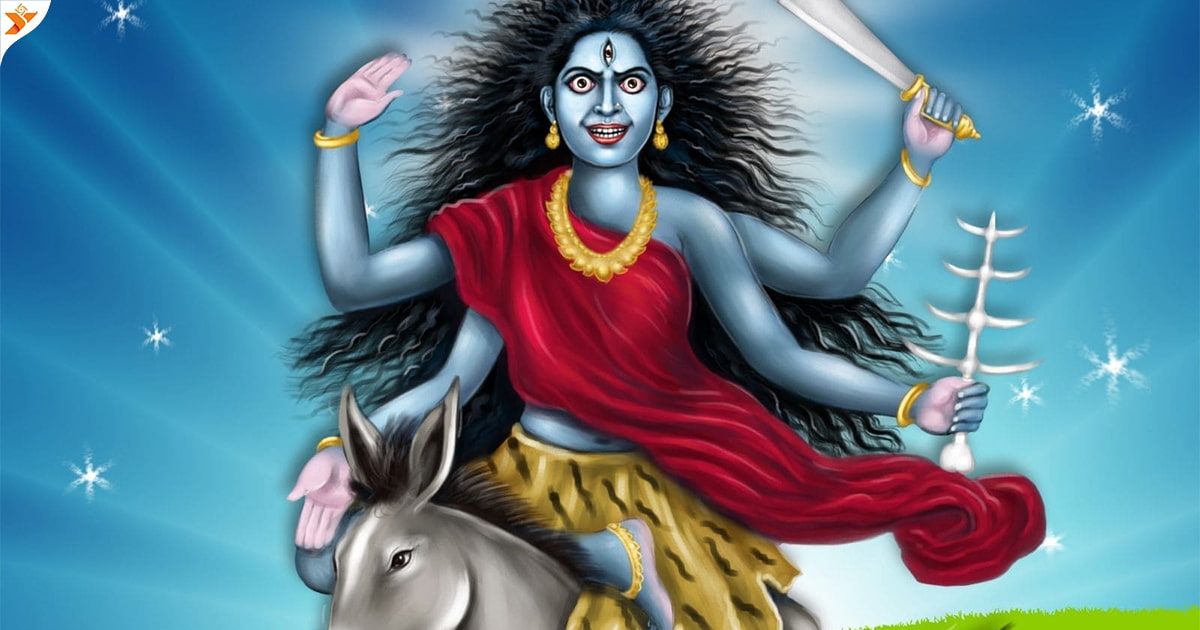
She is the first referenced in the Devi Mahatmya. Kalaratri is one of the fearsome forms of the Mother Goddess. Kalaratri is sometimes called Kaal Ratri, the one who is the night of death. It is believed that the Goddess Chandi created another goddess from her forehead, who came to be known as Kaalratri or Kaali. She represents the destruction of ignorance and darkness although she is kind-hearted toards her devotees.
Maa Kaalratri depicted with dark black skin, unkempt hair and a fearsome expression. She rides on a donkey and has four hands, holding a sword and thunder bolth in the two hand while her other two hands are in protective and blessing gesture. She fought Chandha and Mundha and eventually killed them. Her temple is located in Varanasi, Uttar Pradesh, India.
Kaalratri Mata’s Favourite Colour
The favourite colour of Kaalratri Mata is Grey, which representing darkness and the power to destroy evil.
Kaalratri Mata’s Favourite Flower
The favourite flower of Kaalratri Mata is Krishna Kamal. Devotees honour Goddess with Krishna Kamal flowers to seek her blessings.
Rituals to Worship Maa Kaalratri
- Gather items like hibiscus flowers, clarified butter, lamps, leaves from shami tree and jaggery.
- Light a diya and incense in front of Maa Kaalratri to symbolize purity and enlightment.
- Offer fresh flowers, fruits, rice, holy water and dried fruits.
- Recite Maa Kaalratri mantra and perform aarti in front of the Goddess.
- Recite the Durga Chalisa or Durga Saptasati and sing bhajans and strotras.
- Pray to Maa Kaalratri for strength, courage and protection.
Maa Kaalratri Mantra in Hindi and English
‘ॐ ऐं ह्रीं क्लीं कालरात्र्यै नम:।’
‘Om Aim Hreem Kleem Kalratri Namah’
Woshipping Maa Kaalratri removes fear, negativity and obstacles. She blesses her devotees with courage, protecyion and inner strength, ensuring that they are shielded from harm and darkness.
8. Mahagauri Mata

Mahagauri Mata is worshipped on the eighth day of Navaratri. Her name Mahagauri means “extremly fair and radiant“. According to Hinduism, Mahagauri has the power to fulfil all the desires of her devotees. The one who worships the goddess gets relief from all the suffering in life.
She rides on a white bull, symbolizing purity and carries a “Trishul” and a “Damru” in her two hands, while other two hands are in a blessinga nd protective gesture. Devotees offer coconut to Goddess Mahagauri, representing peace, purity and forgiveness and she is believed to fulfill all the desires of her devotees.
Mahagauri Mata’s Favourite Colour
The favourite colour of Mahagauri Mata is Purple, which symbolizes the grandeur and royalty.
Mahagauri Mata’s Favourite Flower
The favourite flower of Mahagauri Mata is Mogra. Devotees honour Goddess with Mogra flowers to seek her blessings.
Rituals to Worship Maa Mahagauri
- Offer white clothes with white flowers like Mogra to the Goddess on the day of Maha Ashtami.
- Offer milk, sweets, fruits and dried fuits. Offering coconut on the day of Maha Ashtami brings purity and devotion as it considered as a special Bhog of the Goddess Mahagauri.
- Light Ghee lamps and incense stick in front of Mhagauri and chant mantras dedicated to her.
- Sing bhajans and devotional song with families and friends and perform aarti
- Visit temples to seek blessing of the Goddess.
Maa Mahagauri Mantra in Hindi and English
‘ॐ ऐं ह्रीं क्लीं महागौर्ये नम:।’
‘Om Aim Hreem Kleem Mahagauri Namah’
Woshipping Maa Mahagauri brings purity of heart, peace and fulfillment of desire. She is believed to remove all sins and obstacles, ensuring a peaceful and harmonious life for devotees.
9. Siddhidhatri Mata

Maa Siddhidhatri is the ninth form of the Goddess Durga. The name “Siddhidhatri” is derived from two words “Siddhi” which means “supernatural powers” and “Dhatri” which means “giver“. Maa Siddhidhatri is also referred as the giver of supernatural powers or siddhis.
She is depicted seated on a lotus and sometimes riding on a lion. She has four arms holing a lotus, mace, chakra and counch. Her calm and senere appearance represnets her role as a giver of knowledge and blessings. She is worshiped by both gods and humans, and even Lord Shiva is said to have gained his powers from her.
Siddhidhatri Mata’s Favourite Colour
The favourite colour of Siddhidhatri Mata is Peacock green, which signifies end of ignorance and getting access to divine knowledge and wisdom.
Siddhidhatri Mata’s Favourite Flower
The favourite flower of Siddhidhatri Mata is Champa. Devotees honour Goddess with Champa flowers to seek her blessings.
Rituals to Worship Maa Siddhidhatri
- Light a Ghee lamp and incense stick.
- Apply tilak on your forehead and drink water from your palm.
- Perform a kalash pujan and take sankalp
- Offer nine different types of flowers and water to the feet of the goddess
- Offer tilak, kumkum, red chunri, panchamrit, fruits and sweets
- Chant the mantra of Maa Siddhidhatri and pray for the prosperity of the family
- Perform aarti and invite nine young girls for kanjak pujan to serve a meal of poori, kala chana and halwa
- Take blessings from the kanya after the kanjak pujan
Maa Siddhidhatri Mantra in Hindi and English
‘ॐ ऐं ह्रीं क्लीं सिद्धिदात्यै नम:।’
‘Om Aim Hreem Kleem Siddhidatri Namah’
Worshipping Maa Siddhidhatri brings success, spiritual wisdom and fulfillment of desires. It is believed that she blessed her devotees with Siddhis and ensure peace, prosperity and happiness in their lives.







Your blog is a great source of positivity and inspiration in a world filled with negativity Thank you for making a difference