

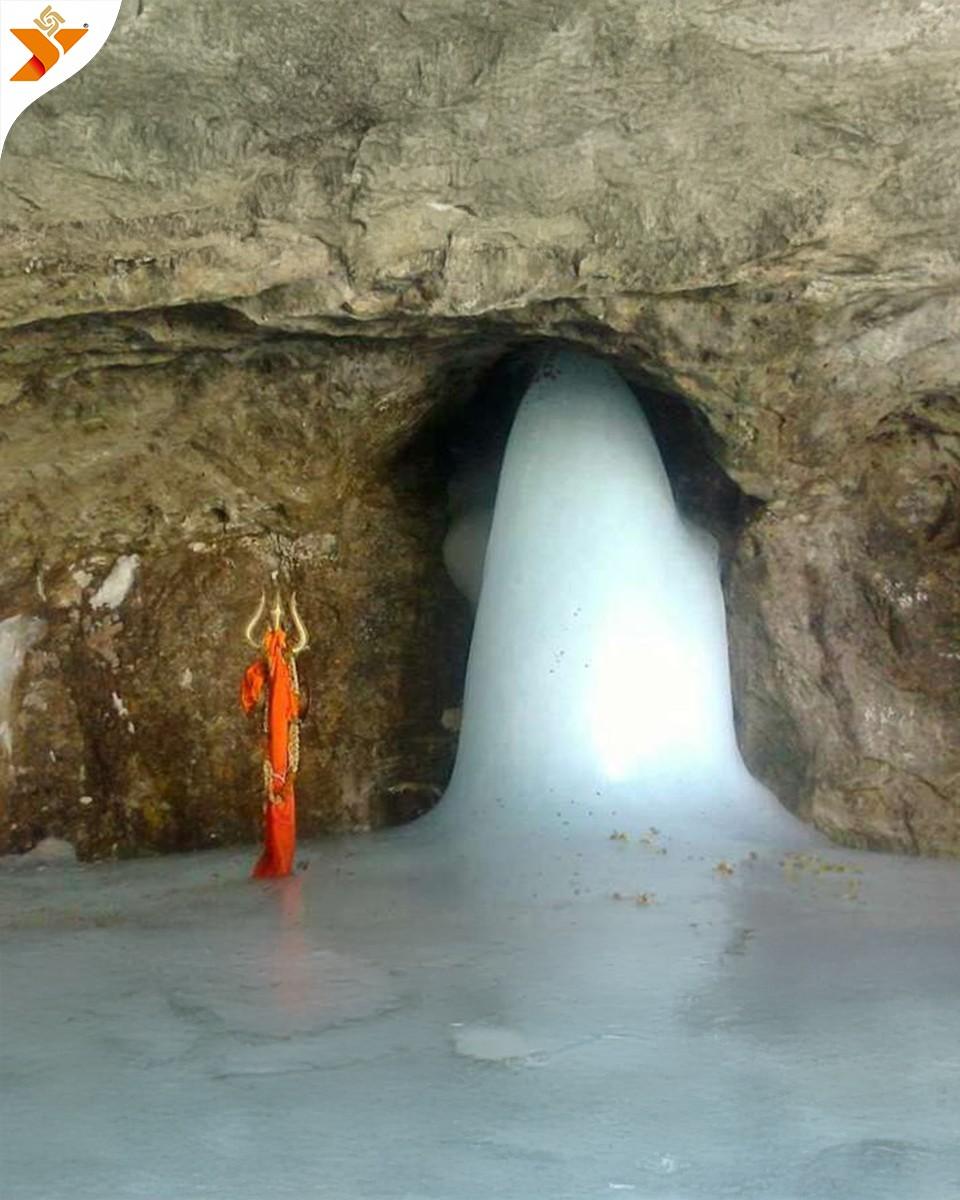
The Amarnath Yatra is one of the holiest journeys in Hinduism. Every year, lakhs of devotees travel to the Amarnath cave in Jammu & Kashmir to see the natural ice Shivling of Shri Amarnath Ji. This yatra is not only about faith but also about strength, as the holy cave is located at a height of around 3,888 meters in the Himalayas.
When you plan your trip, an important question that comes to mind is “Where to stay during the Amarnath Yatra? Don’t worry, there are many stay options available for yatris during the route. From Srinagar base camp to Pahalgam, Baltal, Chandanwari, Sonmarg and campsites like Nunwan, Sheshnag and Panchtarni, you can find different types of accommodation.

Download YatraDham.Org Android App for more guides and easy booking.
In this blog, you will learn about all the stay options starting from Srinagar to higher camps. We also explain important things like safety, travel difficulty and permission rules.
History of Amarnath Yatra
Amarnath is a holy cave in Jammu & Kashmir, famous for the ice Shiva Lingam that forms naturally every year. According to Hindu mythology, this is the place where Lord Shiva told Goddess Parvati the secret of immortality.
The yatra to Amarnath has been done for centuries, originally by local shepherds. Today, it is organised by the Shri Amarnath Shrine Board and attracts thousands of devotees every year.
Amarnath is not only a place of faith and devotion, but also a symbol of spiritual courage, as pilgrims face tough weather and high mountains to visit the cave.
Check, the Amarnath Yatra 2026 Online Registration.
Destination for the Base Camp of Amarnath Yatra
The Amarnath Yatra begins from two main routes:
- Pahalgam Base Camp: Located in Anantnag district, this is the traditional and longer route. The trek from here passes through Chandanwari, Sheshnag and Panchtarni before reaching the holy cave.
- Baltal Base Camp: Located in the Ganderbal district, this is a shorter but sleeper trek to the cave, popular among those with limited time.
Stay Option During Amarnath Yatra
If you are planning for the Amarnath Yatra 2026, choosing your stay is very important. From Srinagar hotels and dharamshalas to Pahalgam accommodation at Baltal, Sheshnag, Nunwan and near the popular attractions, there are many facilities for devotees.
1. Stay in Srinagar: The Gateway to Amarnath Yatra
- Why stay here?
Srinagar is the first stop for many yatris arriving by air or train. It is also home to Amarnath Yatri Niwas Srinagar, managed by the Shri Amarnath Shrine Board.
- Stay Options
You can find budget hotels, dharamshalas & luxury hotels in Srinagar.
- Best for:
A comfortable start to your yatra before you move towards the base camps.
2. Stay in Pahalgam
- About
Pahalgam is a peaceful place surrounded by pine forests and the beautiful Lidder River. It is the base for the Amarnath Yatra.
- Stay Options
You can stay in tents or guesthouses, hotels, dharamshalas and lodges in the area.
- Nearby Camps
Chandanwari, which is about 16 km away from Pahalgam, is best for the camps. It offers basic stay facilities for yatris.
3. Stay in Baltal
- About
Baltal is near the holy Amarnath cave. Yatris who want a shorter trek usually choose the base camp.
- Stay Options
You can stay in tents and lodges with basic facilities.
- Highlights
It is very convenient for yatris who want to go for darshan and return on the same day.
4. Campsites During the Trek (Sheshnag & Panchtarni)
- Sheshnag Camp
The camp is about 12 km from Chandanwari. It is an important stop on the trek where yatris can rest. There are tents and temporary camps for staying overnight.
- Panchtarni Camp
This camp is about 6 km before the holy cave. It is the last stop for yatris before they go to the cave. Tents and temporary shelters are available here too.
5. Stay Near the Amarnath Cave
Staying near the Amarnath Cave is not very common because there are very few facilities. Only temporary tents are available. Most yatris choose to stay at Panchtarni and visit the cave early in the morning.
Best Time to Visit Amarnath
The Amarnath Yatra happens once in a year during the summer, when the weather is safe for trekking:
Summer (June to August)
- The best time for the Amarnath Yatra is during summer.
- The weather is pleasant with daytime temperature around 15-20 degree celsius.
- The yatra usually starts in late June from Pahalgam or Baltal base camp and ends in August on Shravan Purnima.
Monsoon (July to September)
- The region gets heavy rainfall, which makes the trek unsafe due to landslides, floods and slippery paths.
- Authorities stop the yatra during monsoon season.
- It is best to avoid traveling at this time.
Autumn (September to October)
- The weather turns cooler, with temperature around 10-15 degree celsius.
- The scenery is beautiful with colorful landslides, but the yatra usually closed after August.
Winter (November to March)
- Winter is extremely harsh with heavy snowfall and sub-zero temperatures.
- All routes to Amarnath remain blocked and the cave is not accessible.
Activities to Do in Amarnath Yatra
Visiting Amarnath is more than just a pilgrimage; it is a spiritual and nature-filled experience. Here are some of the activities you can do during your yatra.
- Darshan of the Ice Shiva Linga
- Trekking from Pahalgam and Baltal
- Nature & Sightseeing at Sheshnag, Panchtarni and Chandanwari camps
- Photography & Nature Watching
- Participate in Religious Rituals
- Explore Nearby Destinations like Srinagar & Pahalgam
Packing Essentials for Amarnath Yatra
If you are going for the Amarnath Yatra 2026, packing the right things is very important. Here is what you must carry:
Clothes
- Warm Clothes
- Thermal Innerwear
- Gloves, Caps and Mufflers
- Raincoats or Waterproof Jackets
Trekking Gear
- Walking Stick
- Small Backpack for Daily Essentials
- Sunglasses
- Flashlights or Torch
Personal Items
- Water Bottle
- Light Snacks
- Medicines and First Aid Kit
- Toothpaste, Toothbrush and Wet Wipes
Important Documents
- Yatra Permit
- ID Proof
- Hotel Booking Details
- Medical Certificated if Needed
Other Items
- Camera for Photos
- Sleeping Bag
- Extra Warm Socks
Who Can Attend the Amarnath Yatra?
The yatra required certain rules and guidelines to ensure the safety of pilgrims:
Age Limit
- Minimum Age: 13 Years
- Maximum Age: 70 Years
Health Requirements
- Pilgrims must be physically fit.
- A medical certificate may be required for the elderly or physically weak.
How to Reach Amarnath
The Amarnath cave is located in Jammu & Kashmir at an altitude of about 3,888 meters. Pilgrims can reach the shrine through two main routes.

By Air
- The nearest airport is Sheikh ul-Alam International Airport, Srinagar about 70 km from Pahalgam and 100 km from Baltal.
- From Srinagar, you can hire a taxi, bus or tempo traveler to reach the base camps.

By Train
- The nearest railway station is Jammu Tawi Railway Station, which is about 270 km from Pahalgam and 315 km from Baltal.
- From Jammu take buses, taxis and shared vehicles are available to Srinagar, Pahalgam and Baltal.

By Road
- Jammu and Srinagar are well-connected by road to major North Indian cities.
- Regular buses and taxis run from Jammu to Srinagar, Pahalgam and Baltal.
By Helicopter
- Helicopter service are available from Baltal to Panchtarni and Pahalgam to Panchtarni.
- From Panchtarni, the cave is about 6 km away.
The Amarnath Yatra 2026 is not just a trek; it is a spiritual journey through the beautiful Himalayas. Finding the right place to stay during the Amarnath yatra is as important as the pilgrimage itself. Whether you choose Srinagar base camp, Pahalgam (Nunwan), Baltal or high-altitude stops like Sheshnag and Panchtarni, you will find stay options for every budget.
The most important thing is to plan early, book your permits and accommodation in advance and follow the official Amarnath yatra guidelines for a safe and peaceful journey.
Frequently Asked Questions
Baltal and Pahalgam are the base camps of the Amarnath Yatra.
The ideal time for the Amarnath yatra is during the Summer from July to August.
Pilgrims can find hotels, guesthouses, dharamshalas, lodges and tents at Srinagar, Pahalgam, Baltal, Sheshnag, Panchtarni and Nunwan camps.
Yes, the yatra is a moderate to difficult trek, depending on the route. The Pahalgam route is longer but easier, while the Baltal route is shorter but steeper.