


India is a truly distinctive nation. Its population is among the most diverse in the world, and it celebrates a wide variety of festivals, some of which are odd and distinctive.
The Ambubachi Mela 2025 is one such celebration. While discussing menstruation in public is still frowned upon in India, a temple tucked away in the Assamese hills honours and celebrates this natural occurrence.

Download the YatraDham.Org Android App for more guides and easy booking.
Overview of the Ambubachi Festival 2025
As per tradition, the Kamakhya Temple is one of the 51 Shakti Peeths and 108 Shakti Peeths, which are holy locations where pieces of Goddess Sati’s body fell. A distraught and enraged Shiva danced the malicious Tandav dance when Sati set herself on fire after seeing her father taunt him.
Lord Vishnu stopped him by slicing Sati’s body into pieces with his chakra, which were then dispersed over the subcontinent. The Kamakhya Temple, which represents feminine strength and fertility, symbolises the location where her womb and vagina fell.
Ambubachi, which translates as “spoken with water”, also relates to the monsoon season. Numerous responsibilities arrive to obtain their “Rakta Bastar”, the unique benefits of the Goddess. During this mela, worship is conducted by the priest. Regular people attend this celebration, including pilgrims, tourists, and sadhus.
Ambubachi Mela 2025 Date and Time
In 2025, the Kamakhya Temple in Guwahati, Assam, will host the Ambubachi Mela 2025 from June 22 to June 26. In Northeast India, this yearly celebration of Goddess Kamakhya’s holy menstruation is a major spiritual event. During Snan and Nitya Puja, which takes place from 8:43 AM on June 22 to 6 AM on June 26, the temple will be closed for worship.
Also know about 108 Shakti Peeths.
A Religious Gathering
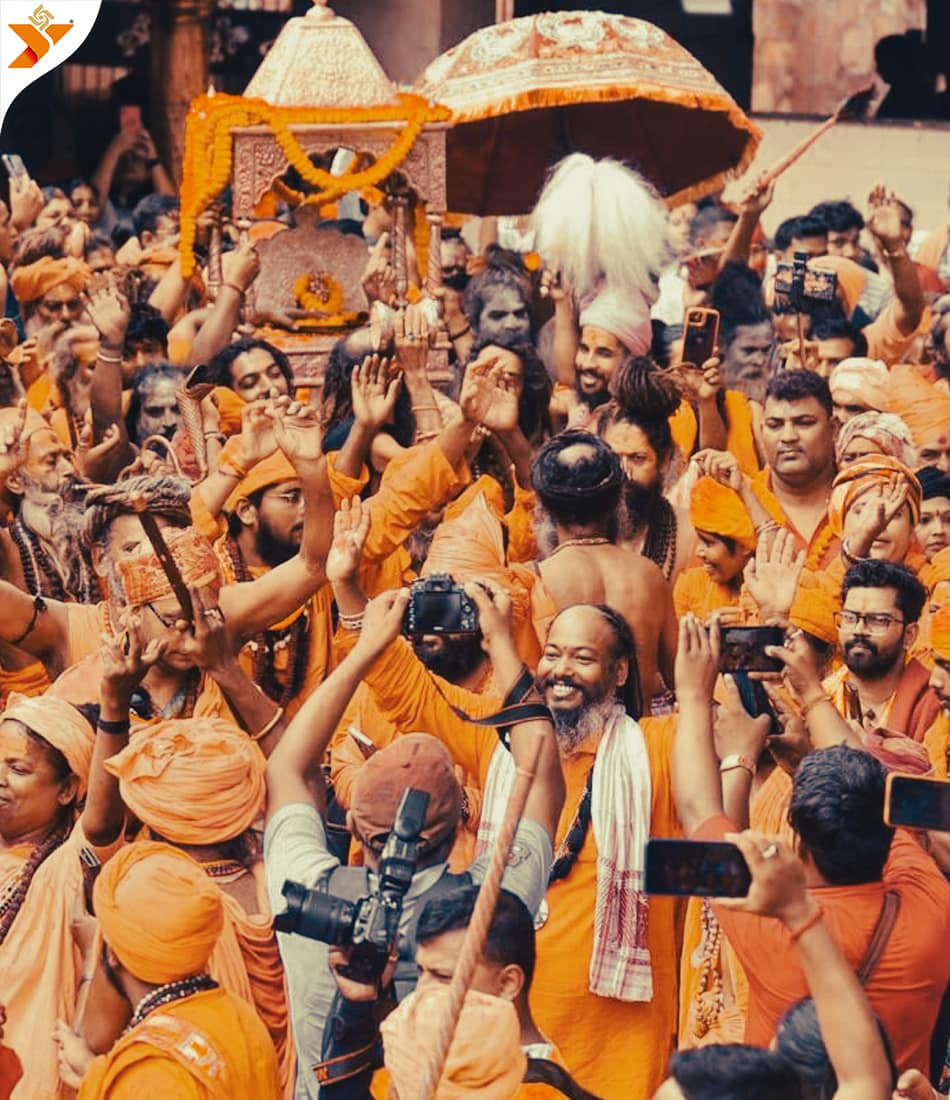
During the Ambubachi Mela 2025, various spiritual practices and pursuits come together. The combination of sadhus and tantriks from numerous spiritual traditions—some of whom only came out for this date and time of the Ambubachi festival 2025—is a perplexing but fascinating blend. A constant chant, the scent of incense, and the sight of hundreds of people praying to their religion fill the space.
Celebration of the Ambubachi Festival
Formative influences and elements of agricultural, social, and religious ideas are among the roots of the Ambubachi concept, and they have all contributed to the phenomenon’s expansion.
The Ambubachi Mela’s primary aspects are as follows:
- The Ambubachi Festival’s celebration of the goddess’ menstrual period and opposition to many menstrual taboos make it a culturally rich place.
- Compared to India, Assam seems to have a less taboo attitude towards menstruation.
- Tuloni Biya, or “little wedding”, is the rite used in Assam to commemorate girls’ passage into womanhood.
- Also referred to as the “Mahakumbh of the East”, it draws tourists from everywhere in the nation.
- The state’s tourist industry will consequently gain a great deal.
A Wide Range of Devotees and Pilgrims
The Ambubachi Mela 2025 will draw such a large crowd. Everyone is present, including normal pilgrims, inquisitive visitors, and mystic sadhus and aghoris. The occasion acts as a reminder of India’s well-known concept of unity in diversity.
Where to stay during the Ambubachi festival?
If you are in search of budget-friendly accommodation in Guwahati, then here is the list for your preference.
- Guwahati-Bharat Sevashram Sangha
- Assam Maheshwari Bhavan, Gujarat
- Nareswar Chakreswar Bhawan, Guwahati
- IRA Bhavan-Guwahati (Near Kamakhya Temple)
The Ambubachi festival is also known by another name, the Tantric Fertility Festival. It commemorates the goddess Kamakhya’s menstrual days. The temple stays closed for three days. Ambubachi means “water-spoken”. It also relates to the rain that is expected to fall during the monsoon season. It sets out on the earth’s voyage prepared for reproduction and fertility. The temple officially opens three days later. Visitors are permitted to enter the temple when the Devi has been cleansed.
Planning to visit Guwahati? Check out the famous Temples in Guwahati
FAQs
The Kamakhya Temple, situated atop Nilachal Hill in Guwahati, Assam, India, is the site of the celebration.
Typically, Ambubachi takes place in late June, during the monsoon season in the Assamese month of Ahaar.
For three days, the temple is closed to represent the goddess’ menstrual cycle. Worship is paused at this moment as a symbol of reverence.
During this period, Kamakhya receives pilgrims, tourists, sadhus, tantriks, and devotees from all across India and beyond. In northeast India, it is among the biggest religious gatherings.
Yes, both men and women can take part.