
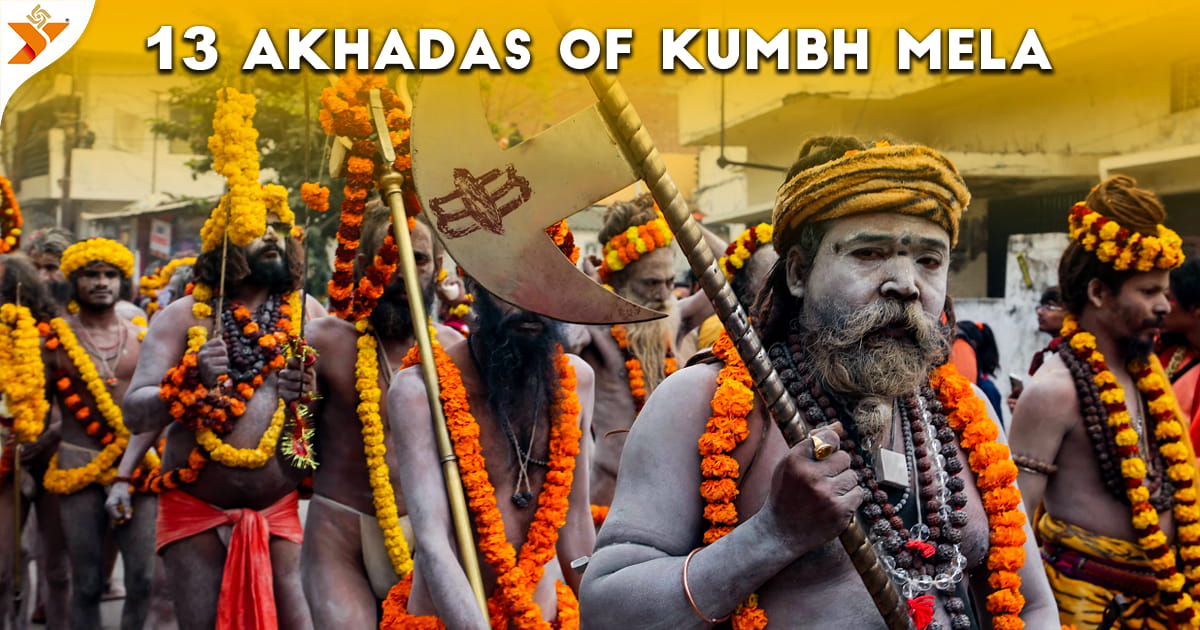
Akhadas are considered the spiritual backbone of the entire Kumbh Mela and it plays a major role in each ritual, tradition and Kumbh activities. Akhadas provide traditions, trained sadhus and teach pilgrims through religious and spiritual teachings.

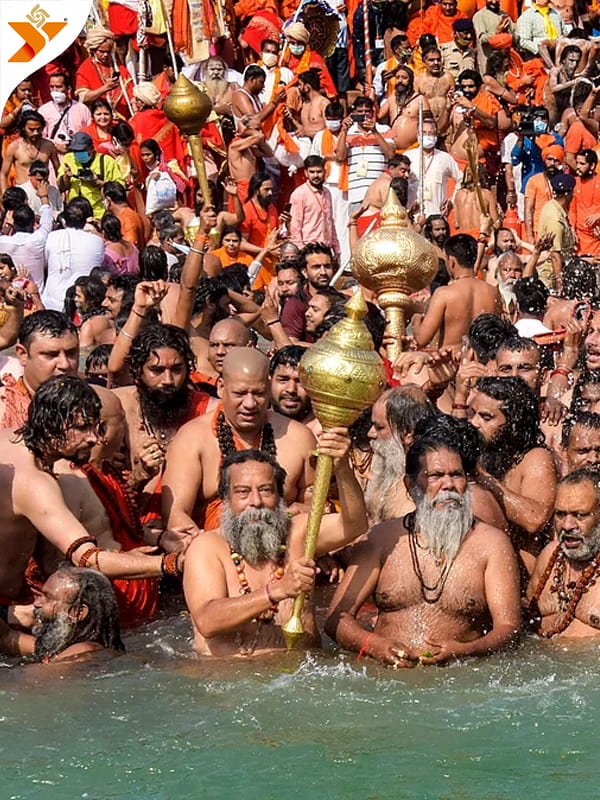
In the Shahi Snan, Akhadas plays major role and take the first dip in the sacred river. This entry order and the Snan order are strictly followed to be respected by each of them. The processions are chanting with different dhuns. It is marked by chants, flags, elephants, horses and lots of spiritual things.
Here is the List of Akhadas that participate in Kumbh Mela according to entry order in Amrit Snan.
1. Juna Akhada(Shaiva Akhada)
- Established: 654 ई
- Ist Dev: Dattatreya
- Speciality: Most Naga Sadhus
- Amrit Snan: They get the first right
- Biggest Akhada
- Dress Code: Bhasma, Bearded Naga Sadhus
- Flag: Red/Kesariya
- Colour: Red/Kesariya
- Identity: Strongest, widest Naga Sadhus
2. Avahan Akhada(Shaiva Akhada)
- Sub Akhada of Juna Akhada
- Importance: After Juna Akhada, they get a chance to dip in the river during Amrit Snan
- Dress Code: Simple Bhagva
- Flag: Kesariya
- Colour: Kesariya
- Identity: Tapasavi Sadhu, Shanti, Focused on Yoga
3. Agni Akhada(Shaiva Akhada)
- Ist Dev: Agni
- Tradition: Shaiva (Shankaracharya lineage)
- Dress Code: Ash-smeared, Saffron/Red
- Flag: Saffron (Flame/Trishul)
- Identity: Shaiva – Naga Sanyasi (Fire Lineage)
4. Niranjani Akhada(Shaiva Akhada)
- Established: 904 ई
- Ist Dev: Shiv
- Speciality: Yog Parampara, Tranquil Saint
- Dress code: Kesariya/Bhagwa
- Flag: Trishul on Kesariya Flag
- Identity: Calm, disciplined, one of the largest Shaiva Akhada
5. Anand Akhada(Shaiva Akhada)
- Established: 8th-9th Century
- Ist Dev: Lord Shiva
- Speciality: Shiva discipline, Tapasya, spiritual stability
- Dress Code: Kesariya/Bhagwa
- Flag: Kesariya flag with Trishul
- Identity: Peaceful Shaiva Akhada, focused on meditation and inner peace
6. Atal Akhada(Shaiva Akhada)
- Serene, Yog Tradition
- Strong discipline
- Dress Code: Kesariya
- Flag: Yellow-type/Kesariya
- Identity: Peace & Meditation
7. Mahanirvani Akhada(Shaiva Akhada)
- Established: 8th Century
- Ist Dev: Lord Shiva
- Importance: One of the most powerful Shaiva Akhada
- Dress Code: Bhasma with three lines
- Flag: Red
- Colour: Red
- Identity: Oldest, Most Powerful Shaiva tradition
8. Nirvani Akhada(Shaiva Akhada)
- Established: Approx. 8th-9th Century
- Ist Dev: Lord Shiva
- Tradition: Shaiva
- Speciality: Oldest Shaiva Akhadas, Strong on Tapasya, Discipline
- Importance: Key role in Amrit Snan, part of the leading procession
- Dress Code: Minimal clothing, Bhasma with Tripundra
- Flag: Saffron flag with Trishul/Tripundra symbol
- Identity: Strict Shaiva ascetics following discipline
- Established: Ancient – probably 9th century
- Ist Dev: Vishnu/Rama
- Speciality: Strong focus on Tapasaya, meditation and serene
- Major Vaishnav’s representation in Amrit Snan
- Dress Code: Minimal Cloth, Vaishnav Tilak
- Flag: Saffron with Urdhva Pundra
- Identity: Strict Ramanandi Ascetics
- Established: 8th Century
- Ist Dev: Lord Ram
- Speciality: Strict Vaishnav discipline, known for deep study of scriptures & Vedanta
- Importance: Peaceful, devotional, non-martial order
- Dress Code: Yellow
- Flag: Yellow
- Identity: Ram-bhakti/Main Point
11. Nirmal(Udasin) Akhada(Udasin Akhada)
- Established: 17th Century
- Tradition: Udasin/Sanatan-Sikh
- Ist Dev: Nirankar(Formless)
- Speciality: Scholar-warrior tradition, experts in Vedanta & Shastra, purity
- Importance: Organise a large religious discourse
- Dress Code: White
- Flag: White
- Identity: Udasin scholarly tradition
12. Bada Udasin Akhada(Udasin Akhada)
- Ist Dev: Adi Guru
- Speciality: One of the oldest Udasin akhada, Seva, meditation and calm discipline
- Importance in Kumbh: Major participant in Udasin Amrit Snan
- Dress Code: White/Light Saffron
- Flag: White/Saffron (Udasin Symbol)
- Identity: Udasin Tradition (Sri Chand Lineage)
13. Naya Udasin Akhada(Udasin Akhada)
- Established: Later branch of the Udasin order
- Ist Dev: Omkar/Nirankar
- Speciality: Peaceful ascetics, quite disciplined
- Importance: Participate calmly, devotional presence, offer satsangs & charitable activities
- Dress Code: White
- Flag: White
- Identity: Udasin Reform Branch
All the Akhadas are equally important for the Kumbh Mela.
Naga Sadhu’s expected count
The Naga Sadhus are divided into multiple akhadas and below is the list of them.
- Juna Akhada: 15000-25000
- Avahan Akhada: 4000-6000
- Agni Akhada: 3000-5000
- Niranjan Akhada: 2000-4000
- Mahanirvani Akhada: 3000+
- Others: 500-2000
Naga Sadhu Diksha in Nashik Kumbh
During the Simhastha Kumbh (Nashik-Trimbakeshwar):
- Diksha is conducted near the Godavari basin Akhada camps
- Initiates take their first sacred dip in the Godavari River
- Godavari is also famous as the Ganga of the South, making the rebirth equally divine
Akhada-wise Chant Comparison
In the grand Kumbh Mela, different Akhadas chant their own slogans, which are dedicated to specific gods.
| Akhada Type | Main Diety | Chants |
|---|---|---|
| Shaiva Akhadas | Lord Shiva | Har Har Mahadev |
| Vaishnav Akhadas | Lord Vishnu | Namo Narayan |
| Udasin Akhadas | Nirgun/Nirakar | Various |

Download YatraDham.Org Android App for more guides and easy booking.
Understanding the ritual and entry order of the different Akhadas is very important, especially during the Amrit Snan. At the peak of the snan days, lots of pilgrims come to dip in the river and to seek the blessings of the Sadhu-saints.
How To Reach Kumbh Mela Nashik
To be a part of the next Simhastha Nashik Kumbh Mela, which will start from late 2026, there are various ways to reach both the Kumbh locations: Nashik& Trimbakeshwar. Here you can see how to reach Kumbh Mela Nashik by air, rail or road. As per your preference, reach the locations earliest, especially during the peak snan days.
FAQs
Thirteen Akhadas are participating in the Kumbh Mela, including seven Shaiva Akhadas, three Vaishnav Akhadas and three Udasi/Other Akhadas.
Mainly, Juna, Avahan and Niranjani Akhadas have Naga Sadhus.
Yes, each Akhada have it’s own dedicated flag with various colours.
In the inner sections are not allowed, but in the outer areas of the Akhadas, women are allowed.
Usually, Juna or Senior Shaiva Akhadas take the first dip in the sacred River during the Shahi Snan.
Yes, there are lots of accommodations available to stay near the Kumbh Mela area. You can check them from YatraDham.Org.